About Vince
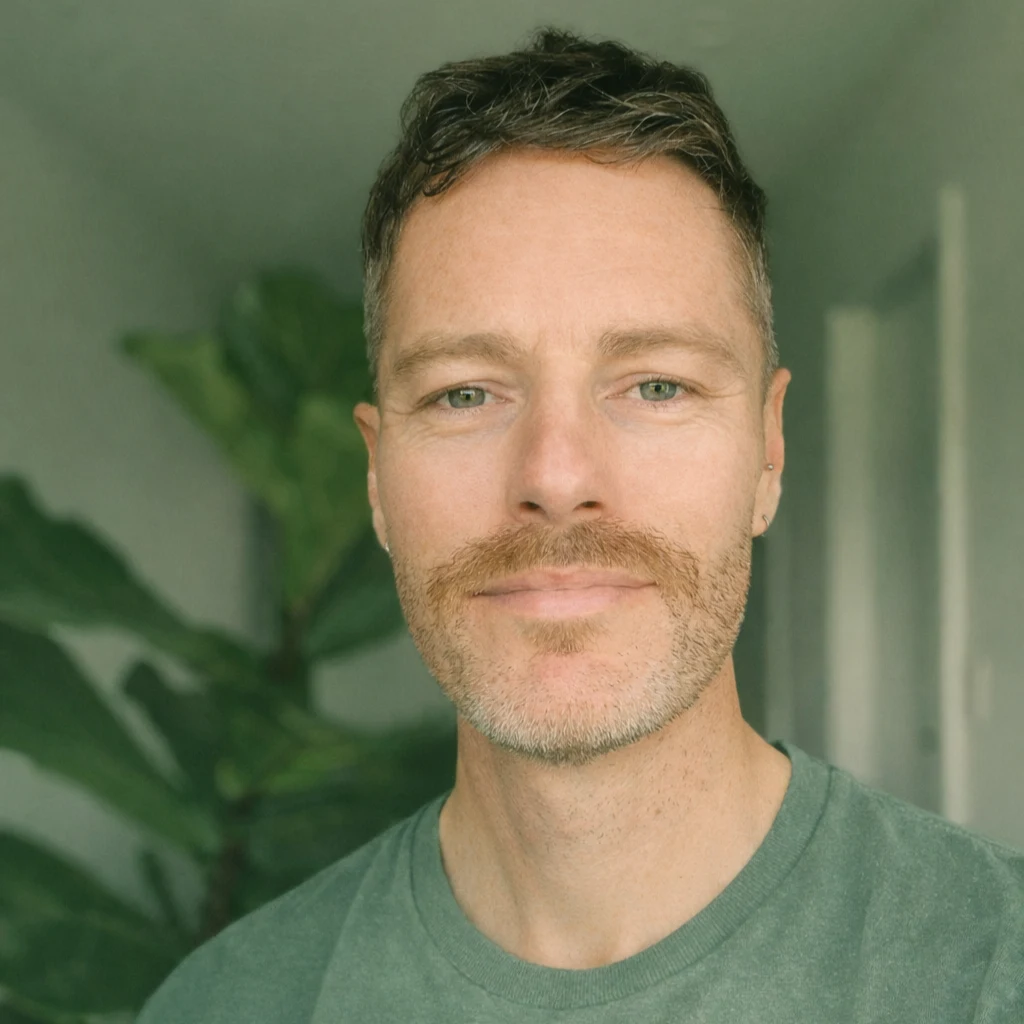
I’m Vince. I work with adults who are trying to make sense of themselves, their relationships, or a life that has become hard to sustain.
You do not have to perform being fine here.
Bio
Close attention. Honest conversation.
We can start with the version you have, and make sense of it together.
My work is person-centred and relational. I listen carefully, ask questions, and help you notice connections that can be difficult to see from inside your own life. You decide what matters; we work on it together.
Some of what’s most useful happens in the room while it’s happening. What shifts when you mention a particular person, what you’re doing with your hands, what I notice in myself when you go quiet. I offer what I notice, never impose it, and you can always say no thanks.
You might be tired of performing, stuck in shame, competent at work in a way that costs more than anyone knows, or unsure how to stay connected to yourself and the people around you. You don’t need to justify any of it.
I’m part of the rainbow community. I bring that lived experience to our work, without assuming your story is the same as mine. LGBTQ+ and takatāpui clients are welcome here, as are adults from every background. Identity can be the focus, part of the picture, or not what we talk about at all.
Values and approach
Relational first, with enough structure to feel clear.
You’re the expert on your own life. I bring questions, observations, and ideas for us to try. We decide on a direction together and check whether it is helping.
- Silence is fine. So is not knowing what to say yet.
- Camera on or off, and we can go slower at any point.
- You can have things in writing, or take your time answering.
- Narrative and acceptance-based ideas come in as lenses when they are useful, never as a programme.
Before counselling
I spent twenty years in IT before I did this.
IT and quality assurance, then a career change in my late thirties.
That work taught me to notice patterns and to sit with complexity without needing it resolved straight away. It also taught me the limits of that. You can analyse a system perfectly and still not have touched what is actually wrong for the person inside it.
If you arrive with your situation already diagrammed, having explained yourself so thoroughly that nobody has noticed you’re in pain, I recognise it. I have done it. You won’t need to translate it for me.
Why I do this
I spent a long time not understanding myself.
It took me decades to make sense of why I was the way I was.
I wondered what was so different about me that life felt so painful while everyone else seemed to carry on as though nothing was wrong. I felt alien, and alone with it. People offered advice and comfort, but none of it explained why I felt so different. I just did not feel understood.
What changed was realising that we all hurt, in different ways and to different degrees. It is part of being human, and it connects us. The way the world is now makes that hard to share, and the isolation grows when we cannot.
That is a lot of why I do this work. The change is yours. I am not the one doing it, but I will be beside you while it happens.
Te Tiriti o Waitangi
Te Tiriti shapes how I practise.
I am Pākehā. This is what I hold myself to, not a claim to expertise.
I work from the articles themselves rather than a summary of them. The NZAC Code of Ethics asks the same of me, though it is not the reason I do it.
Whakawhanaungatanga comes before any of them. Relationship first: who you are, who you come from, what you bring with you, and who I am sitting in front of you. None of what follows means much without it, and it is the part I am least willing to hurry.
Kāwanatanga is about who governs. The systems I practise inside, including my professional body and the way health services are arranged here, were built under that authority and have not served Māori equally. That is not ancient history and it is not ordinary. I would rather name it than practise as though it has nothing to do with me.
What the rest of it asks of me, in a counselling hour, is fairly ordinary.
Tino rangatiratanga is authority that was never given up. In this room it means you hold your own. You decide how we work, how fast we go, what we go near and what we leave alone. Your mana is not something I grant you, protect on your behalf, or hold in trust while you get better.
Ōritetanga is about equity, which is not the same as treating everyone identically. It shapes what I charge and who I keep room for, and it means the work of being understood should not land more heavily on you than on anyone else.
Wairuatanga is the fourth article, spoken at Waitangi rather than written into the text: an assurance that belief and custom would be protected. It matters here more than people tend to expect. Your karakia, your tikanga, your wairua, and whatever else you hold sacred belong in the room as they are, with no translation into a Western frame required first. So do the people you carry with you, including the ones who came before.
I receive cultural supervision from a Māori supervisor. That is ongoing infrastructure for my practice rather than a qualification, and it does not make me culturally competent. If something I do misses, I would rather you told me.
Credentials
Qualifications, membership, and supervision.
Clear professional context so you can decide what feels right for you.
- AUT Bachelor of Health Science in Counselling, completed; Student Affiliate member of NZAC.
- Provisional NZAC membership pending.
- I receive 1 hour of supervision for every 10 hours of client work.
- I have over 200 hours of clinically supervised counselling experience.
Professional context
I practise under regular supervision and work within a clear counselling scope. Some needs may sit outside what I can safely offer. If that happens, I will say so clearly and support referral options where needed.
Clear boundaries
What I do and do not provide.
Clear boundaries help keep the work honest and safe.
- Not an emergency service or crisis hotline.
- No diagnosis or medical advice.
- No court reports, legal reports, or formal workplace assessments.